[ad_1]
If you need a refresher, however, Dr. Brendan Camp of MDCS Dermatology in New York City recently reminded us that UV radiation from the sun and artificial sources like tanning beds and sun lamps is a known carcinogen responsible for causing skin cancer as well as premature skin aging. (This is also the case for individuals with naturally higher melanin production in their skin.)
Fortunately, the beauty industry has afforded glowy-skin seekers tons of safe and UV-free alternatives that offer sun-kissed results without having to log hours in the sun or on a tanning bed.
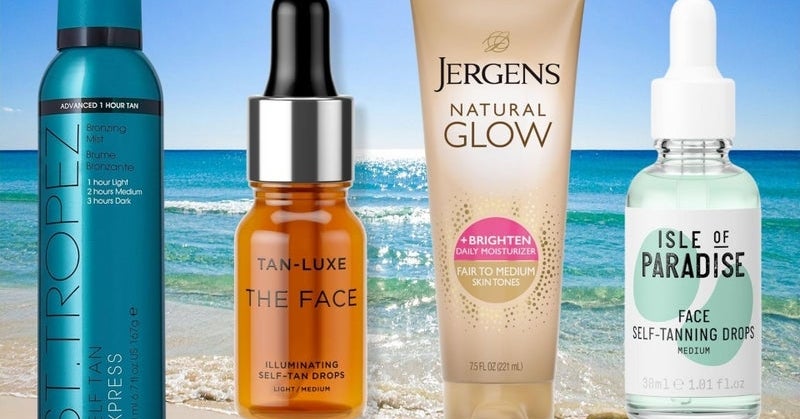
Celebrity esthetician and Austin, Texas-based medical spa owner Kristin Gunn said that “[s]elf tanners come in a variety of forms [like] creams, mists, lotions, gels and even milks,” which means there’s something to meet everyone’s needs and preferences.
According to board-certified dermatologist and skin care brand founder Dr. Azadeh Shirazi, most self-tanners work by using the color additive DHA, a type of sugar that interacts with the amino acids in the skin’s surface layer to produce color. “Self tanners are not only safe and convenient, but they also have the advantage of giving you almost immediate results with a color that’s customizable,” Shirazi said.
Gunn prefers mists for the body as they seem to go on evenly and have less room for error while tanning drops are great for the face, especially mixed in with moisturizers. Shirazi likes gel-based formulas for those with oily or acne-prone skin types.
Gunn, Camp and Shirazi have revealed to us some of their favorite at-home self-tanners, the benefits of their formulations and who they might be best suited for. See them for yourself in the list ahead before you venture outdoors without sunscreen or even think about a tanning bed.
[ad_2]
Source link