[ad_1]
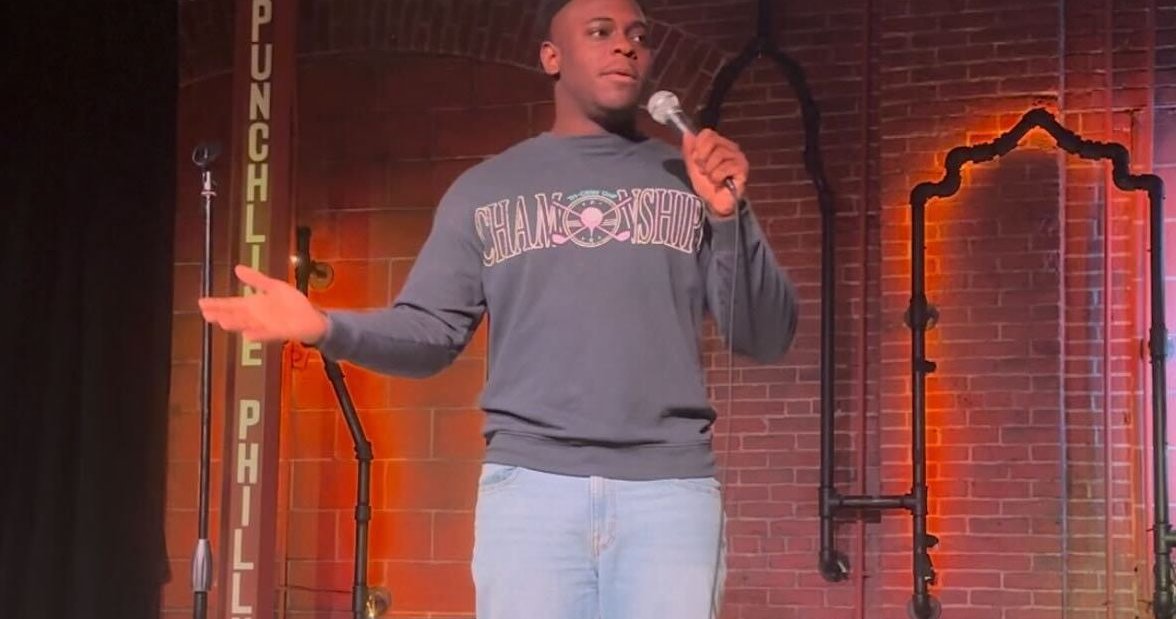
In the Democratic primary for Pennsylvania’s 3rd Congressional District, Jahmiel Jackson will be facing a number of candidates with decades of experience, including state congressmen Sharif Street (D-3rd) and Chris Rabb (D-200th). All are vying to replace U.S. Rep. Dwight Evans, who’s not seeking reelection after over 45 years in politics.
For the 24-year-old, it’s a race that’s not just about representing the district he grew up in. It’s about upsetting an electoral system that he feels isn’t made for young people to have their voices heard.
MORE: Gov. Sherrill asks N.J. residents to document ICE activity and share it online with the state
“I don’t want to be your intern,” Jackson said. “I don’t want to go to your fancy dinners and your galas while you are managing a system that’s made to charismatically manage our decline.”
Jackson is part of a growing number of young people running for offices across the country, attempting to unseat politicians who, in some cases, have held offices since before they were born. They’re targeting some top concerns among millennials and Gen Zers — from job access to gun violence — and attempting to connect with voters through social media and, in Jackson’s case, stand-up comedy.
Rishaun Hall, the 28-year-old president of voter advocacy group Young Involved Philadelphia, said he’s seen a growing narrative of young people feeling disconnected from the elected officials who represent them. He felt this played out recently in New York City’s mayoral race, when 34-year-old Zohran Mamdani defeated Andrew Cuomo, 68, and Curtis Sliwa, 71, in November.
“Young people want to see people who look like them in those chairs because at the end of the day, when things do go wrong, it’s like, ‘Oh, well at least this person can tangentially feel my pain or what I’m going through, or can be my voice, my sounding board, my advocate,'” Hall said.
Following the retirement of Rep. Mary Jo Daley (D-148th) from the Pennsylvania House of Representatives, Wynnewood resident Leo Solga, 22, decided to run for office. Solga, a researcher at the University of Pennsylvania’s Carey Law School, worked for Daley for two years before she announced in October 2025 that she wouldn’t seek reelection.
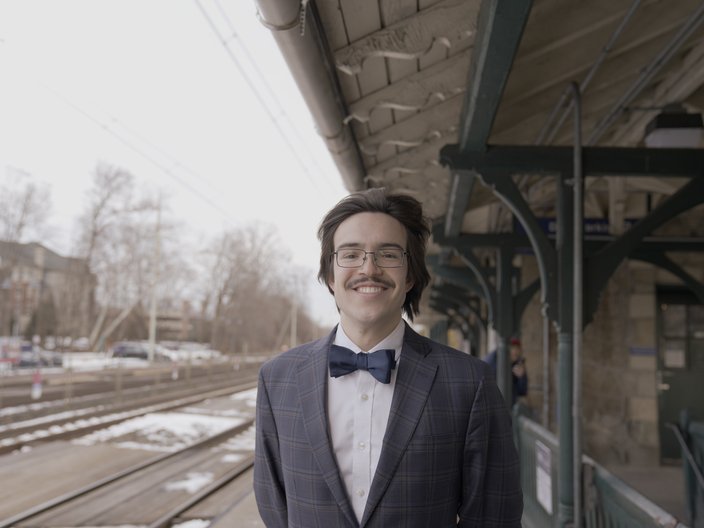 Provided Image/Leo Solga
Leo Solga, 22, is running to replace Rep. Mary Jo Daley in the Pennsylvania House.
Running for office was always something Solga was interested in — he was the speaker for the undergraduate assembly at Penn while he was a student there. When the opportunity came up, he said he decided to take it after feeling like he wasn’t being represented by the current politicians in Harrisburg. It was something he felt was reflected on a national level, too, with “80-year-olds seeming to run the whole country.”
“The average first-time home buyer is now 40, a record low number of 40-year-olds even own a house, that’s crazy,” Solga said. “And it’s not just home ownership, the record-high unemployment rate for recent college graduates is also something that we’re worried about. I would say that young people are like, ‘Well, we’re kind of being left behind by the baby boomer plutocratic elite.'”
Some of Solga’s team is made up of recent graduates and current undergraduates, and he hopes to build a community of young, local Democratic leaders in his work. His mission, though, isn’t to overtake the career politicians, but instead to bring the ideas of young people to the table alongside those with decades of experience.
“The nature of a representative body is to represent the people, and the representative body is not representing the people if it’s everyone from one stage of life,” Solga said. “I think that’s just not really productive at a certain level.”
For Hall, while some older politicians might have experience in similar roles, no one knows how to be an elected official before they become one. Plus, he said, there are plenty of industries such as science and technology where young people are disrupting everyday operations and sharing new ideas.
He also thinks it’s less about age and more about how the job gets done. Some elected officials, he noted, are still mentoring younger ones, staying connected with the concerns of young people and staying true to how policy impacts their constituents.
“If you’re doing good work, then age truly doesn’t matter,” Hall said. “It’s the ones that are just keeping the seats warm and not being attentive, not being responsive to your community, those are the ones that may need a change in occupation. I’m not against by any means people who are 20 years (into their job). If you’ve been good at your job for 20 years, then you’re good at your job. It’s when you are purposely shutting out young people, that’s what I have a problem.”
How Jackson and Solga will fare in the race remains to be seen, but they’re in good company. Rep. Alexandria Ocasio-Cortez (D-N.Y.) famously became the youngest woman elected to Congress when she won her 2018 election at age 29. In Pennsylvania, Nick Miller (D-14th) became the youngest state senator in 135 years when he was elected at 27 in 2022. Philadelphia’s Joe Picozzi (R-5th), was then elected as state Senator at age 27 in 2024.
Although he’s only 24, Jackson said he does have experience: He’s worked on 12 political campaigns, including mayoral and attorney general races. Especially with the amount of colleges in the city, he thinks that young Philadelphians need to start rallying around younger candidates. While he ceded that many of them might not win, he believes it’s a fight worth having.
Should he win the primary in May and general election in November, Jackson said he doesn’t see himself staying in Congress longer than four to six years. For him, part of the movement of young politicians is holding people accountable for their campaign promises and bringing in fresh ideas with each term.
“Serving for Congress is a two-year venture before you’re up for reelection, but for most other candidates who have turned a career into our politics, this seat will become a lifetime appointment,” Jackson said. “So it’s really engaging with younger people to say ‘Do you want to try something new for our future for two years and then maybe reevaluate? Or will you be stuck with someone who has turned their office into a lifetime appointment?'”
[ad_2]
Source link