LOS ANGELES — Dr. Martin Luther King Jr. is likely the first name that comes to mind when you think of the Civil Rights Movement. The preacher, turned dynamic orator and community leader, has a legacy of work that still echoes into today through his words, his actions and his message.
But there’s another side to him that is often overlooked, and it’s a crucial piece to understand the man who would change a nation. “Hoops, Hopes & Dreams” tells the story of how Dr. King used basketball to connect with young people and organize communities during moments of protest.
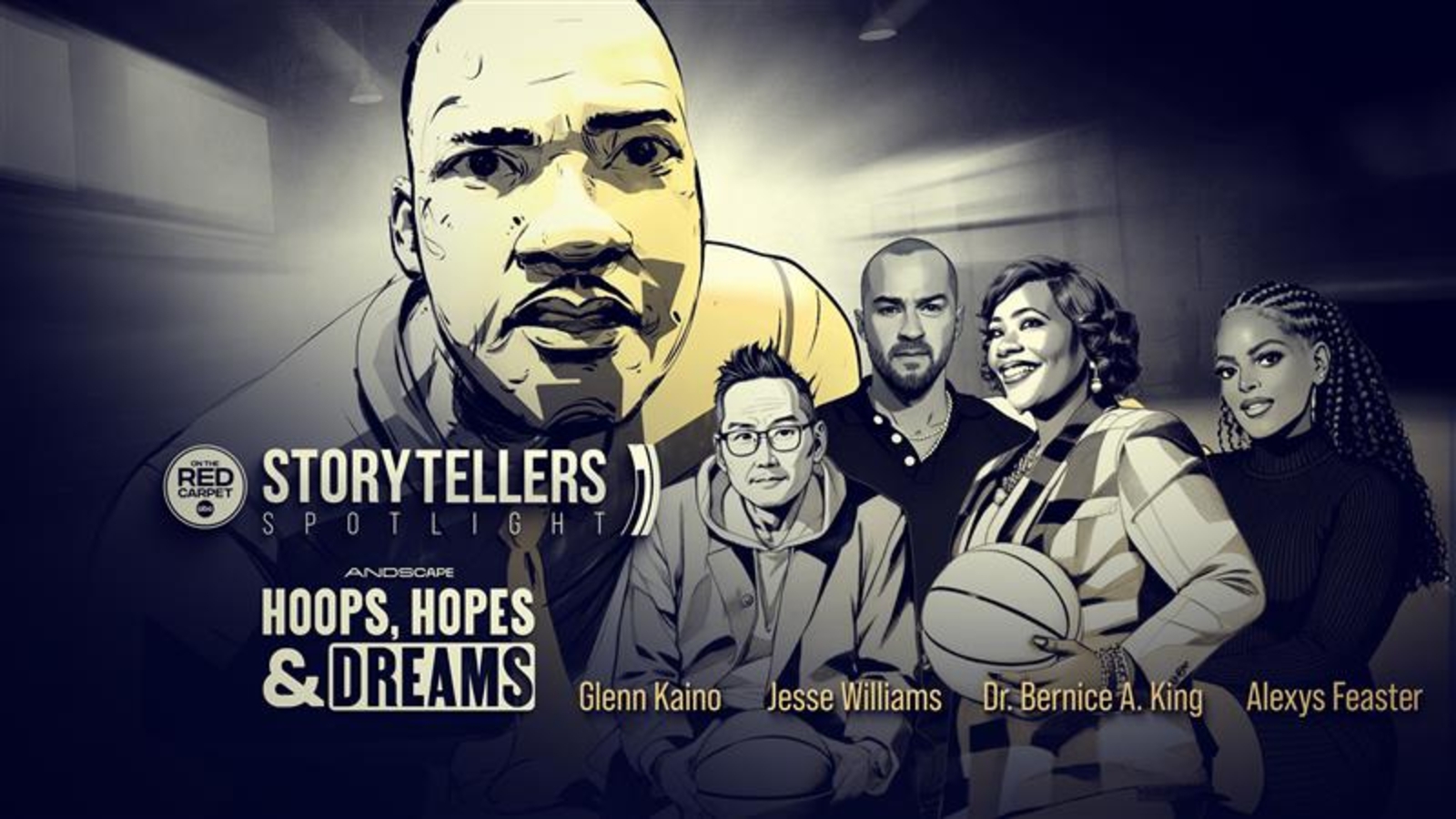
ABC’s On The Red Carpet Storytellers Spotlight sat down to talk with the filmmakers behind the documentary on how they wanted to bring this new side of MLK’s story to the world, including someone who knew him from the day she was born.
“What really inspired me to join ‘Hoops Hopes & Dreams’ as an executive producer, is it gave me an opportunity to participate as a storyteller in showing an expansive part of my father,” Dr. Bernice A. King said. “So many people saw him as this bigger than life leader, and they forgot that he was just an ordinary man doing extraordinary work and being obedient to his calling.”
MLK was only 26 when the Civil Rights Movement was starting, part of a wave of young people helping to spread information about community actions like the Montgomery Bus Boycott. From the start, he understood that the real power was in the people they could reach.
“This was not a leader’s movement,” Dr. Bernice A. King said. “It really was a people’s movement. My father just happened to be the spokesperson who exercised influence. Connect to people where they are. And because of segregation, there were very few places where we could hang out. So the court was one of those places.”
Glenn Kaino, renowned artist and director of “Hoops, Hopes & Dreams,” had previously made an Emmy-nominated documentary about Olympian Tommie Smith called, “With Drawn Arms.” Kaino’s team also helped Smith start his foundation that first honored Ambassador Andrew Young, a close friend to Dr. King during the movement.
While giving his honoree speech, Young offhandedly mentioned a piece of forgotten history.
“Andrew gets on stage and he says, ‘Tommie, did I ever tell you how great of a basketball player I was?'” Kaino said. “‘How Dr. King and I used to play basketball to connect with kids in the movement?'”
From there, Kaino knew what his next project would be.
Alongside Kaino was actor and activist Jesse Williams, a long-time collaborator and friend.
“I met him at his gallery here in LA and we hit it off,” Williams said. “We just connected on, how do we get ourselves more visible with a purpose? How do we make something that matters and that people can touch and feel? Telling stories that we need to archive, our leaders and our heroes. We need to expand the narrative, not just catalog what already exists, but ask a follow-up question.”
“Hoops, Hopes & Dreams” is an expansion of the historic narrative of Dr. Martin Luther King Jr., detailing the focus on connecting with communities and the power of sports that is still used in the movements of today.
“Basketball as a vehicle for cooperation, working together and seeing and being receptive to one another,” Williams said. “Unifying folks who don’t speak the same language, aren’t from the same place, aren’t the same size or age, across all generations and cultural norms, consistently proves to be immeasurable.”
Cross-generational storytelling is a key part of the film, which also touches on how President Barack Obama also used basketball as part of his campaign strategy to connect with voters.
“We naturally saw an updated version of what we were discovering about Dr. King’s process,” Williams said. “That felt familiar.”
To help tell a fully rounded story about the partnership and cross-section of sports and politics, the team brought in Alexys Feaster, who played a key part in Obama’s reelection team.
“One of the first things that I did was create Athletes for Obama,” Feaster said. “We all know the power of the voice of athletes, and my job was to bridge that gap. This film brings out the opportunity for us to find commonality, because there is commonality amongst all of us, even if it’s just that we like the same basketball team.”
Feaster is an athlete herself, being a Junior Olympic champion in racquetball. She would go on to work for the NBA, and currently is an entrepreneur focused on creating social impact through sports and entertainment. The heart of her work has a very personal beginning.
“Something I’m really proud of, is that my dad was the first African American player to integrate the Citadel baseball team,” Feaster said. “And so, when we talk about stories like this, I remember seeing a news clipping of my father, with his afro, sitting on his sofa with his grandparents and getting signed to the baseball team, integrating that team. When we talk about legacy and family, it’s not just this movie. For me, it goes so much deeper.”
This documentary felt like a natural culmination of Feaster’s experiences. In order to bring her onto the team, what was first needed was a simple connection.
“It started with my dear friend Michael Latt,” Feaster said. “I got introduced to him through a friend, and as he started to tell me about this film he was working on with his dear friend Glenn Kaino, he said ‘I don’t know anyone who’s worked in politics and sports the way you have. We’re working on this story, and we need you to be a part of it.'”
Latt was a renowned producer who had worked with people like Ava DuVernay and Common, and was the founder of Lead With Love, a company dedicated to uplifting underrepresented creative voices in Hollywood.
During the production of the film, however, he was tragically killed during a home invasion in late 2023.
“We’re so excited that this film has been so well received at film festivals with our partners at Andscape, it will be seen on Hulu,” Kaino said. “But it doesn’t get easier as the success grows because of the loss of Michael Latt.”
Latt grew up with storytelling, with both of his parents being in the filmmaking sphere around LA. Above all, though, he was a community organizer, activist, marketer and collaborator who knew how to harness the power of storytelling to affect change in the world. “Hoops, Hopes & Dreams” was part of that mission.
“What was interesting about Michael is in high school, he was the starting quarterback for his team,” said Michelle Satter, Latt’s mother. “He understood sports and he understood how important it was to bring people together. It was not about one person, it was about all of them.”
What had really spurned on Latt’s drive for social change storytelling was when his mom introduced him to director Ryan Coogler.
“At the time, Ryan Coogler was in search of a world that would appreciate the work he had done,” said his father, David Latt. “The added connection was Ryan Coogler was a receiver, so it was a receiver and quarterback connecting. Michael saw if you align yourself with storytellers who have something to say, who want to move the world, that’s important work that you can do.”
While Dr. Martin Luther King Jr. wasn’t necessarily telling stories while on the court, he was fostering the kind of connections and community that allowed stories and ideas to be shared. That was the crucial groundwork the movement carried forward.
“This is a human figure who, beyond the movement, work, speeches and oration, was committed increasingly and especially towards the end of his life about togetherness for all people,” Williams said. “Trying to elevate poor and working people and show them to each other and that we are all mirror images of each other.”
That is the heart of “Hoops, Hopes & Dreams,” to let the world know about the leader who inspired people by meeting them face-to-face before he spoke to crowds of thousands.
“Life is about storytelling from generation to generation,” Dr. Bernice A. King said. “If you think about my father’s vision of the beloved community, one of the ways that we can create that beloved community is through storytelling. It removes the defenses and we break through, and we realize that we really are a human family.”
The film is a reminder that as much was accomplished by people like Dr. King, there is still work to be done. To continue their legacy, we must keep building communities to carry stories into tomorrow.
“As far as we’ve come, we’ve got a long way to go,” Kaino said.
“Hoops, Hopes & Dreams” is streaming now on Hulu.
Andres Rovira and Dean Singleton contributed to this report.
The Walt Disney Company is the parent company of Hulu, ESPN and this ABC station.