CAMDEN, N.J. (WPVI) — Police departments have been using A.I. technologies for years, but recently those tools have advanced exponentially.
Proponents tout their efficiency, but critics warn that there needs to be safeguards.
The Camden County Police Department’s Real Time Crime Center is one spot local police use A.I. to help fight crime.
“This is the nerve center, the brain of the operation that goes on a daily basis,” said Lt. Gordon Harvey.
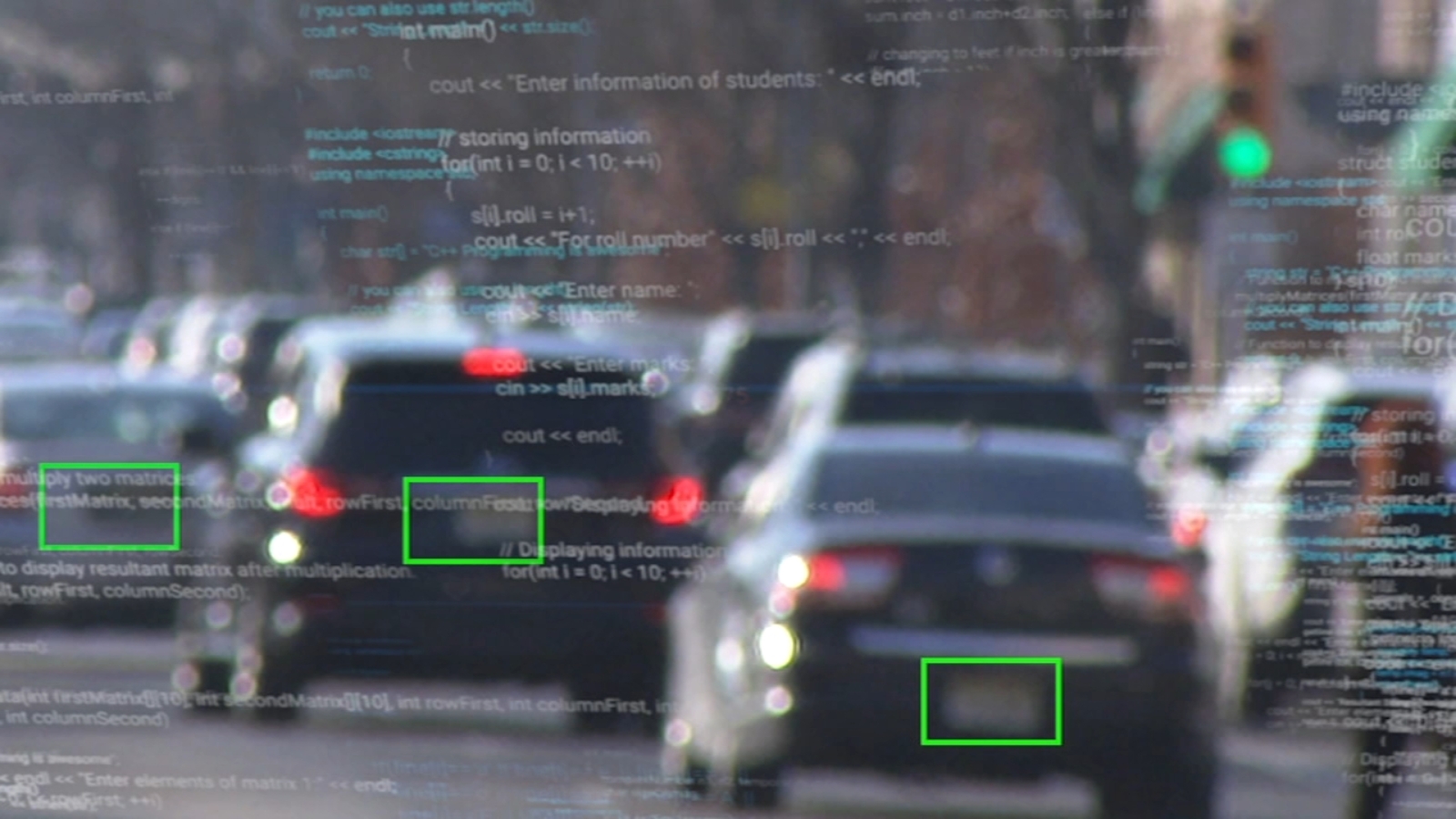
A.I. is used to run plates on the department’s automated license plate readers, also known as LPRs.
“The best way I can equate it to is if we have a needle in a haystack,” said Lt. Harvey. “We’re able to look at a screen, and it only shows us the needle.”
Simply put, cameras capture the license plates.
A.I. can then analyze thousands of images in seconds and alert law enforcement if a vehicle is wanted in connection with a crime or is stolen.
“We’re able to use the cameras, identify illegal dumping,” he said. “We’re then able to hot list those vehicles. Go capture the people right after they do it and hold them accountable.”
Dr. Steve Morreale is a former DEA agent and police officer. He is also a proponent of A.I. capabilities.
“A.I. is the future without question,” he said.
Dr. Morreale now works as a professor and hosts the CopDoc podcast. He authored the book “Leading Police with AI”.
He advocates for its use but stresses it also needs to be monitored.
“It’s people over machine rather than machine over people,” he said.
Emerging A.I. tools available to law enforcement include robotics for forced entries, facial recognition software in public settings and drones acting as First Responders.
Dr. Morreale said agencies need to be transparent on A.I. usage and new laws and internal policies put in place as guardrails.
“Too often we see this kind of deploy first, find safeguards later mentality,” said Katie Kinsey with The Policing Project.
Kinsey works to help ensure accountability in policing.
She described the concerns of using A.I. to write police reports faster.
“We’ve all heard the word hallucinate. They make up things sometimes. And the idea that we don’t know the rates at which they’re making up facts in a police report and how to sort of control for that type of error,” she said.
Some police in our area were reluctant to discuss the use of A.I. with the Investigative Team. It can be a political hot potato with concerns about civil liberties.
“Try it. Give it a try. Trial and error. Pilot it and see what benefit it can be,” added Morreale.
A lot of this technology can be cost-prohibitive for police departments.
But proponents say that as A.I. usage increases, and as costs come down, so too will crime rates.
Copyright © 2026 WPVI-TV. All Rights Reserved.