Pennsylvania’s higher education institutions largely got a flat budget under Gov. Josh Shapiro’s spending plan released last month — but school leaders last week urged state House lawmakers to bump up their appropriations, arguing that the commonwealth needs the investment.
The requests come as the pool of high school graduates shrinks, projected state expenses outpace revenue and the federal government restricts its funding. But state-owned and state-related universities, as well community colleges, said the state dollars are needed to offset costs that would otherwise fall on students.
She said tuition increases for the last 10 years fell below inflation, “which is resulting in a very heavy constraint on other strategic investments that we’re able to make.”
Pitt seeks $161 million, up from its current $155 million.
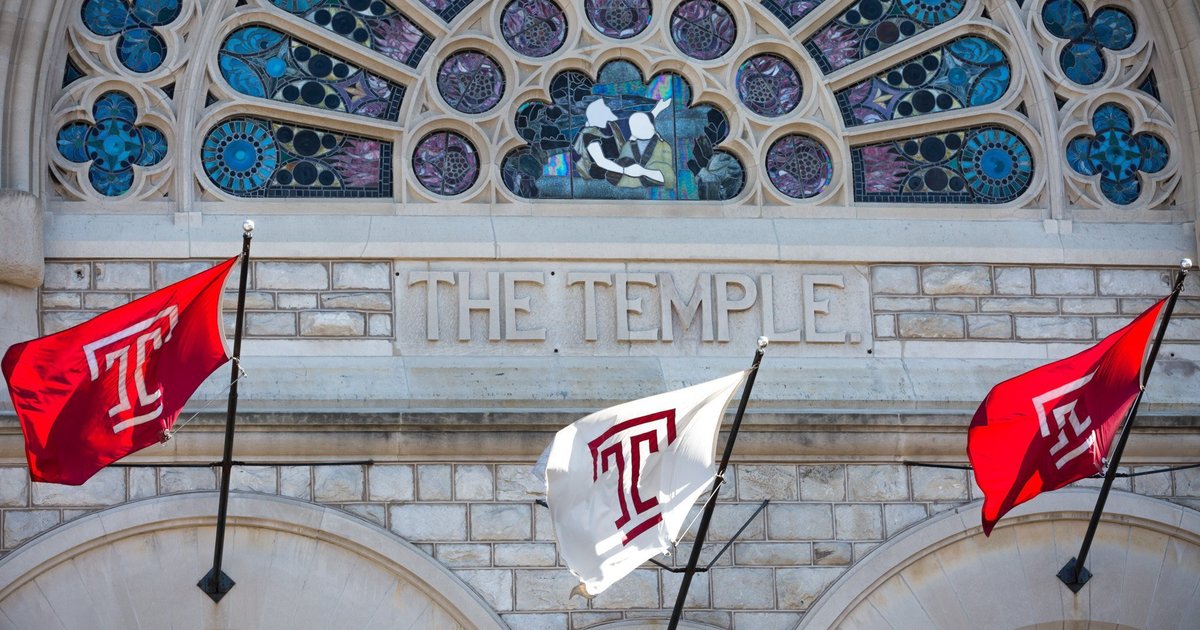
Temple University’s president pointed to cost-cutting measures — such as an early retirement program that saved $15 million — taken in conjunction with new initiatives, namely expanding public safety efforts in Philadelphia, a medical campus in York and a dental clinic in Tamaqua.
“You can’t cut your way to success,” John Fry said. “Right now, we’re under intense pressure to continue to look at the expense side. To continue to balance our budget without using too much of our reserves. It’s a tight position.”
Temple, which currently gets $158 million, is asking for $183 million. The state’s largest school, Penn State, is in line for $278 million under Shapiro’s proposal — but university leaders said an appropriation of $394 million would allow it to freeze tuition rates for undergraduate students.
The last state-related school, Lincoln University, asked for $24 million, up from Shapiro’s proposed $23 million. Shapiro also proposed creating a performance-based fund of $30 million for state-related schools, which are public-private hybrid options with lower costs for in-state students.
Challenges for state-owned schools and community colleges
The state’s 15 community colleges would get $277 million under Shapiro’s proposal, but they are requesting $294 million.
Traditionally, operating costs for these schools are supposed to be a three-way split between the state, local governments and students — but falling government appropriations means that, “students are bearing much of the burden of attending a community college,” said Tuesday Stanley, president and CEO of the Pennsylvania Commission for Community Colleges.
The 10 state-owned institutions under the Pennsylvania State System for Higher Education seek $652 million, up from their current $626 million allocation. PSSHE Chancellor Christopher Florentino said the 5% increase “requires us to focus on keeping our belts tight,” but “would enable us to keep tuition at the same level into the following year.”
Campuses include the Indiana University of Pennsylvania, Cheyney, PennWest Clarion and Shippensburg.
The increased interest in online learning — specifically from older students who left school before completing a degree — counteracts the declining number of traditional college students between the ages of 18 and 22 years, Florentino said.
“It is a sizable extra market in the commonwealth, and there are challenges around it because we can’t just treat them as if they’re 18-years-olds,” he added. “They’re at a very different place in their lives, and we need to recognize that.”
That added flexibility can also be beneficial for people looking to make a mid-career change, said Karen Riley, president of Slippery Rock University.
“We haven’t heard that people will stop learning, quite the contrary. People’s jobs will not be more static — in fact, they will be much more fluid in the future and so we have to be nimble,” Riley said.
At neighboring Butler County Community College, President Megan Covall highlighted how community colleges could be used to quickly establish training programs for local industry and meet workforce development needs.
“I would just say that the benefit of being a community college, and certainly sharing a county with a PSSHE institution, we’re very connected to local business and industry,” Covall said. “Down the road from BCCC is Cleveland Cliffs. They just got some new machinery and some new heating and cooling equipment, so we were able to set up a program for them to train their employees.”
Community colleges in Lehigh and Montgomery counties are similarly launching new programs following major investments from Eli Lilly and Johnson & Johnson, respectively, to train specialized workers.
Time to ‘right size’ the state’s higher education landscape?
Penn State President Neeli Bendapudi said funding hasn’t kept up with inflation for decades. With more than 41,000 undergrad students, she said the university got “substantially less” per student when compared to its state peers — whether a state-related university or another state school.
In light of its commonwealth campus closures last year following financial difficulties, however, some lawmakers criticized the request for additional funding.
“I can’t help but feel that it’s super hypocritical that you’re here talking about Pennsylvania investing in Penn State, when Penn State has turned its back on seven commonwealth campuses, including Penn State Fayette in my district,” said Rep. Charity Krupa (R-Fayette).
Bendapudi called it “an agonizing decision,” saying the institution sought to work with communities through the transition.
“I cannot deny how painful it is to the community and to the individuals there. There’s nothing I can say that makes that go away because it’s true,” said Bendapudi, responding to another legislator about their campus closure. “I will tell you that the lack of population in those areas makes it very expensive for a Penn State degree to be there.”
Echoing some concerns raised by Senate Republicans in earlier budget hearings, Rep. Jim Struzzi (R-Indiana) wondered about the need to “right size” the state’s higher education landscape.
“I think we all appreciate the importance of higher education. I think we’ve heard a lot today about the demographic challenges and perhaps the need to right size higher education,” Struzzi said.
Bendapudi called the number of schools in the commonwealth “a challenge,” adding that there are 20% fewer 1-year-olds than 18-year-olds in the state.
“Pennsylvania has way too many colleges per student,” she said. “I don’t know how we address it, but that’s the reality.”
Pennsylvania Capital-Star is part of States Newsroom, a nonprofit news network supported by grants and a coalition of donors as a 501c(3) public charity. Pennsylvania Capital-Star maintains editorial independence. Contact Editor Tim Lambert for questions: info@penncapital-star.com.