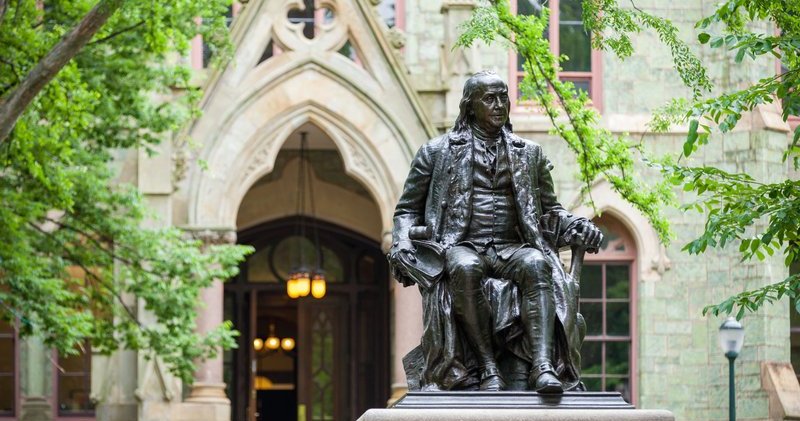
The University of Pennsylvania‘s community has asked the school to reconsider proposed changes to its open expression guidelines, which dictate how protests and other forms of assembly are held on campus.
In June 2024, Penn adopted temporary guidelines in response to demonstrations held that spring, including a two-week-long pro-Palestine encampment. Those rules, which included banning overnight demonstrations, were in place while the administration conducted a review for permanent guidelines.
MORE: Judge rules Penn must turn over list of Jewish people on campus
On Tuesday, the administration released its new proposal. From now through May 18, Penn students and staff will have the chance to submit feedback in an online survey. There will also be two community listening sessions before the final version will be presented on Sept. 9.
Per the new proposal, unauthorized overnight activities will be banned and considered trespassing and excessive noise that disrupts work and learning. Jessa Lingel, president of AAUP-Penn, said she’s concerned that the person who determines the potential outcome in the case of a possible open expression violation will be selected by the provost. To her, that’s not a democratic way to resolve conflict.
“When I got to Penn in 2015, we actually really prided ourselves on having robust frameworks for open expression, and these are just a total move away from that,” Lingel said. “It’s really rolling back freedoms when it comes to free speech and open expression and academic freedom on campus.”
The open expression guidelines don’t apply to what’s said in classes, but it includes demonstrations, protests, vigils and other “ways of making one’s views known peacefully.” Anything that’s spoken, written, appears on signs or is created as artistic expression at those events falls under its purview, including things that are shared online.
A spokesperson for Penn declined to comment on the proposed guidelines.
Lingel said she’s also worried that digital content and other forms of online expression would be covered under the new guidelines, as that was not the case in previous versions. She feels the guidelines are “tying our hands” as far as what student, staff, alumni and community members can do and say around controversial topics.
While that kind of debate can still happen in a classroom setting, she feels that the ability of student organizations to express their views should be the “lifeblood of U.S. college campuses.”
“Being able to raise awareness for issues that are the things we teach about in class, those should be protected, and that should really be at the center of this, not trying to use the guidelines that penalize that kind of consciousness-raising and also preclude the kind of rigorous debate we’re trying to set up,” Lingel said. “It’s really disturbing to see how far away we are from the process we’re supposed to have.”
Members of Penn’s student body have also expressed their disapproval of the new policy. Musab Chummun, the vice president of Penn’s Undergraduate Assembly, told the Daily Pennsylvanian that the revisions do not protect open expression at the university.
“Firstly, what constitutes disruption/violations of open expression is too arbitrary,” Chummun told the outlet. “If the University can restrict speech without clear justification, the application of open expression becomes inconsistently applied and subject to bias.”
Penn first established their open expression guidelines in 1968. Before implementing the temporary guidelines in 2024, the open expression guidelines were last updated in 1993.
The temporary guidelines included new provisions which said posters, banners and signs needed to be removed after two weeks or within 24 hours of the event they’re promoting. They also banned permanent markings including spray chalk and climbing or decorating statues on campus.