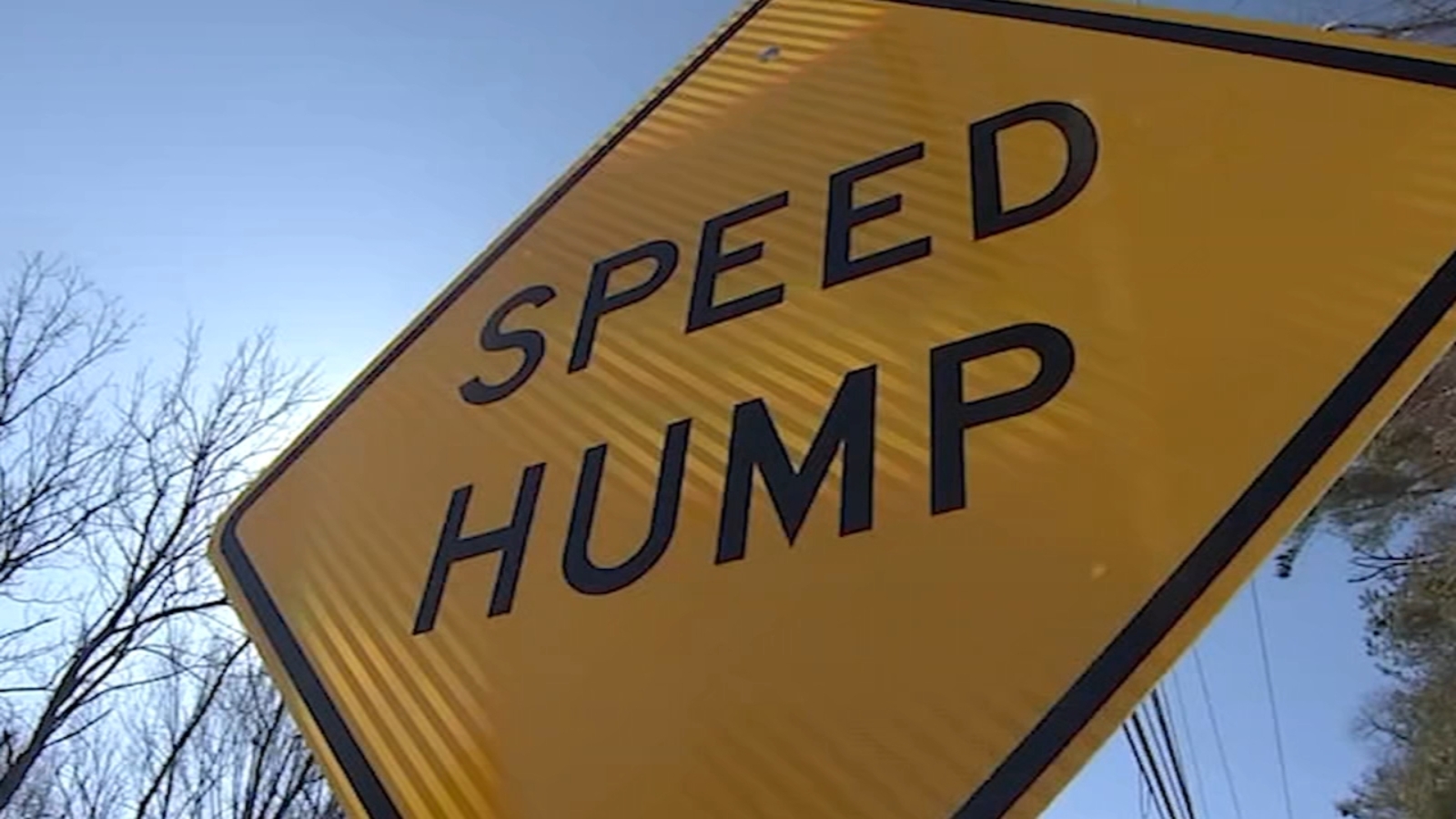
PHILADELPHIA (WPVI) — The Philadelphia Controller’s Office says an inspection of 140 speed cushions at 44 schools last summer and fall found that only two met the height and length specifications outlined in traffic engineering blueprints.
The devices are intended to slow traffic around schools and other locations for safety. But City Controller Christy Brady said the review showed most were improperly built. “95% of the speed cushions were too steep… meaning above a 10% grade… that’s the standard,” she said.
Brady launched the investigation after a surge of complaints to the city’s 311 system. Homeowners reported noise and drivers swerving around the cushions, while vehicle owners said the devices caused damage. One resident described the underside of his vehicle, saying, “underneath here is all skidded out and on this side it is actually broken under.”
Bruce Williams said his Toyota Prius was damaged by a cushion outside Henry Lawton Elementary in Wissinoming. “I’m probably doing about 12 miles an hour and I still bump my skirt on the car,” he said.
State and federal guidelines call for speed cushions to be no more than three to four inches high, with PennDOT noting a trend toward a 3.5inch maximum. Measurements taken near William Lawton Elementary showed cushions as high as seven inches. “Engineering standards are there for a reason. It’s to prevent damage to cars for public safety,” Brady said.
Inspectors found that 27 of 133 cushions measured had grades two or three times the required standard. Cushions outside Mayfair Elementary and Meredith School in Queen Village were among those cited. “So you’re really encountering a large, large hump in the road,” one person said.
Brady said 93 percent of cushions also had runs shorter than the blueprint requirement of 36 to 42 inches, including one measuring just 12 inches outside Childs Elementary on 16th Street in Point Breeze. “The blueprints are there. This is a fixable job,” she said.
She added that the number of noncompliant cushions citywide remains unknown, noting that several outside school zones also appeared too high. Since 2023, 135 schools have had speed cushions installed at a cost of $51,000 per school. Brady said she could not yet determine whether the city would be responsible for repairs or how much they might cost taxpayers. “If they’re not going to go back and repair it, then we should seek restitution,” she said.
Some residents expressed frustration about ongoing vehicle damage. “If I get it fix, it’s just going to break again… You just can’t afford to do that. Every time you go over a speed bump,” one said.
The Philadelphia Streets Department, which oversees the project, said it could not comment until officials review the full report.
Copyright © 2026 WPVI-TV. All Rights Reserved.