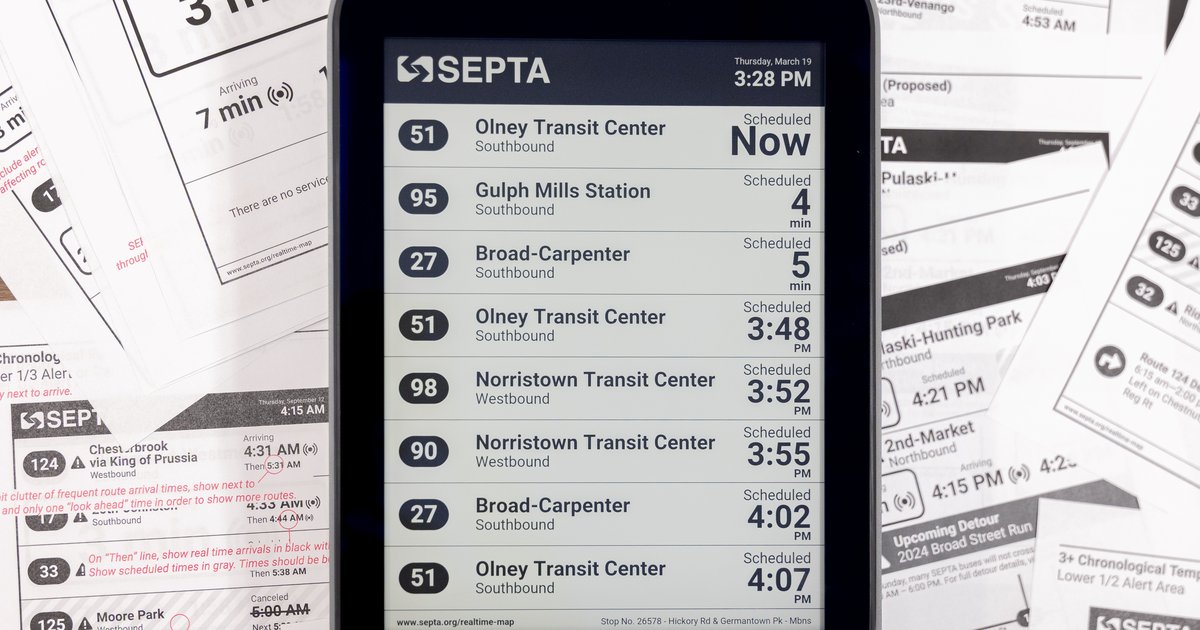
SEPTA will begin testing solar-powered devices that give riders real-time travel information at bus stops and trolley stations.
“It’s going to look like a large iPad, but it’s got a Kindle-like black-and-white screen,” said Lex Powers, SEPTA’s chief customer experience officer. “The reason why we can put it at a bus stop and the reason why it’s a good technology is because it doesn’t use a lot of power.”
MORE: Mayor Parker proposes raising rideshare tax to $1 per trip to fund public schools
The tablet-style devices will show times for upcoming arrivals, detour information and other relevant alerts that people can also get on SEPTA’s website and app.
“We can never assume that somebody’s got a smartphone or has access to the app or website, even now,” Powers said. “There’s also the larger convenience factor of having the information right there in front of you.”
By the end of May, SEPTA will install 10 of the devices and start surveying riders who encounter them. The trial will assess how well the displays function and the accuracy of their information. SEPTA has not identified which bus stops and trolley stations will get the devices, but the priority will be to test them in places with the most riders.
“One of the top things we hear from people is how important real-time information is,” SEPTA spokesperson Kelly Greene said. “It doesn’t seem to matter which mode they’re riding. It seems to be universal.”
Regional Rail stations — and a growing number of subway stops — have electricity easily accessible to keep the system synced with up-to-date travel information. Bus stops and many of SEPTA’s trolley stops don’t have the same power sources.
The new solar-powered devices from Connectpoint cost about $5,000 apiece. They use e-paper technology that can keep text displayed without drawing power between updates. The Chicago Transit Authority began testing similar devices last year.
“E-paper has been kind of taking off nationally with transit agencies to better provide information to bus riders,” Powers said.
For blind and low-vision riders, the new devices will have text-to-speech buttons.
SEPTA decided to try the technology after hearing feedback from thousands of riders at community meetings for the planned bus network overhaul. Officials were even inspired by the ingenuity of South Philly resident Max Goldberg, who created his own digital display to show real-time bus information from the window of his home.
The New Bus Network initiative, formerly known as the Bus Revolution, will be SEPTA’s first comprehensive redesign of the bus system since the authority was created 63 years ago. The initiative was paused during SEPTA’s funding crisis last year, but will now be implemented in three phases starting in August and running through next summer.
By June 2027, when the plan is fully operational, SEPTA says the number of bus routes with trips every 15 minutes or less will go from eight to 29.
“The New Bus Network is all about higher frequencies and more reliability, and a system that better matches the travel patterns of people today,” Powers said.
SEPTA has increasingly turned to technology to improve the overall performance of the bus system. The use of AI cameras to ticket vehicles blocking bus lanes already has cut down on route times, Powers said, and now the automated enforcement cameras are being deployed on 30 trolleys.
With more than 13,000 bus stops in SEPTA’s service area, it won’t be realistic to install the new real-time displays at every stop. But SEPTA officials say the displays could be rolled out at more locations in the coming years, making the system more accessible and intuitive.
“Real-time information has become an expectation of riders, and it’s something that we’re still catching up on,” Powers said. “I would argue, too, that it affects our bottom line in terms of ridership and the amount of money that we’re getting through revenue. I think it’s an overall positive thing.”