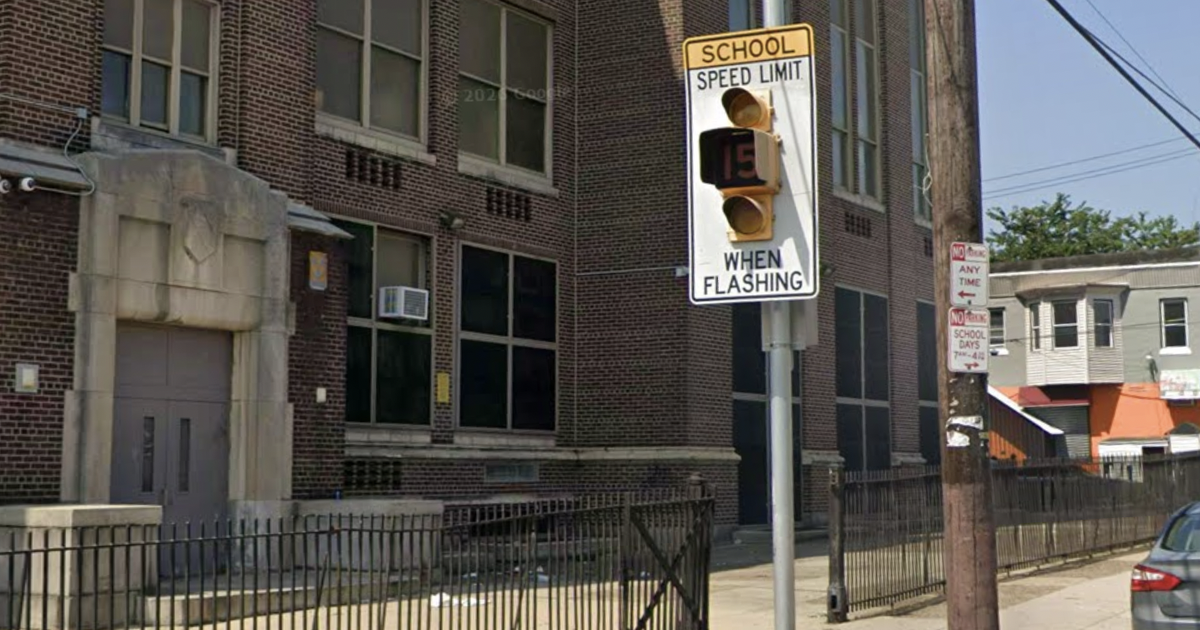
New speed cameras will be turned on Tuesday outside five Philadelphia schools where dangerous driving and crashes have been a persistent problem in recent years, the Philadelphia Parking Authority said.
The automated cameras will be the first the city has deployed specifically to address speeding in school zones, where speed limits are set at 15 mph. Tuesday marks the start of a 60-day warning period before drivers will be fined $100 for violations. The cameras, installed at street level, only will be active when yellow lights are flashing in school zones, and they will be turned off on holidays.
The five schools chosen for the program, and the locations of their cameras, are listed below:
• John B Stetson Middle School: East Allegheny Avenue, between A and B streets, in Kensington
• KIPP North Philadelphia Charter School: North 16th Street, between Cumberland and Huntingdon streets, in North Philly
• Widener Memorial School: West Olney Avenue, between Broad and 16th streets, in North Philly
• High School of the Future: West Girard Avenue, between 39th and 40th streets, in East Parkside
• William L. Sayre High School: Walnut Street, between 58th and 59th streets, in West Philly
The school zones were selected based on crash data between 2019 and 2023, PPA officials said. During that time, there were 10 crashes in which people were killed or seriously injured in these zones, and 25 pedestrians were struck.
The PPA also is authorized to use speed zone cameras at Visitation BVM School in East Kensington and Northeast High School in Northeast Philly. But the PPA only may use cameras in five school zones at a time.
“We have seen dramatic results with similar technology along Roosevelt Boulevard, resulting in a 95% reduction in speeding and a 50% reduction in pedestrian-involved crashes,” PPA Executive Director Rich Lazor said in a statement.
The first speed cameras on Roosevelt Boulevard were installed in 2020 before the program expanded to cover a stretch of nearly 12 miles in Northeast Philly. Another set of speed cameras were activated on North Broad Street in November.
Last April, City Council passed legislation that expands automated speed enforcement to school zones. The law, sponsored by Councilmember Isaiah Thomas (D, at-large) authorized a five-year trial that can be renewed or made permanent in 2028. Thomas called the program a lifesaving step that aligns with the city’s Vision Zero initiative to eliminate traffic fatalities.
Proponents of automated speed cameras cite data showing they effectively reduce crashes in places where they are installed, including a 36% drop in crashes on Roosevelt Boulevard between 2019 and 2021. Critics contend they are costly traps that lack human oversight and enforce speed limits that are set too low. Others argue they disproportionately penalize drivers in low-income communities.
In December, the Trump administration sent a letter to cities advising them that federal grant money no longer will be approved for speed cameras in school and work zones. The funding originally stemmed from the Safe Streets and Roads for All program, which was included in the 2021 infrastructure law enacted during the Biden administration.
“This Administration will not allow critical safety dollars to subsidize the purchase of speed cameras so governments can pursue unfair revenue schemes,” U.S. Department of Transportation spokesman Nathaniel Sizemore said in a statement to the Washington Post.
Michael A. Carroll, managing director of Philadelphia’s Office of Transportation & Infrastructure systems, said the city’s school zones need more protection.
“We have tried many traffic calming methods to stop people from driving dangerously fast in school zones, but many drivers still speed,” Carroll said in a statement. “We must ensure that students walking to school and home are safe, as well as the crossing guards who often put their lives at risk to get drivers to slow down. Speeding is the number one cause of fatal crashes.”