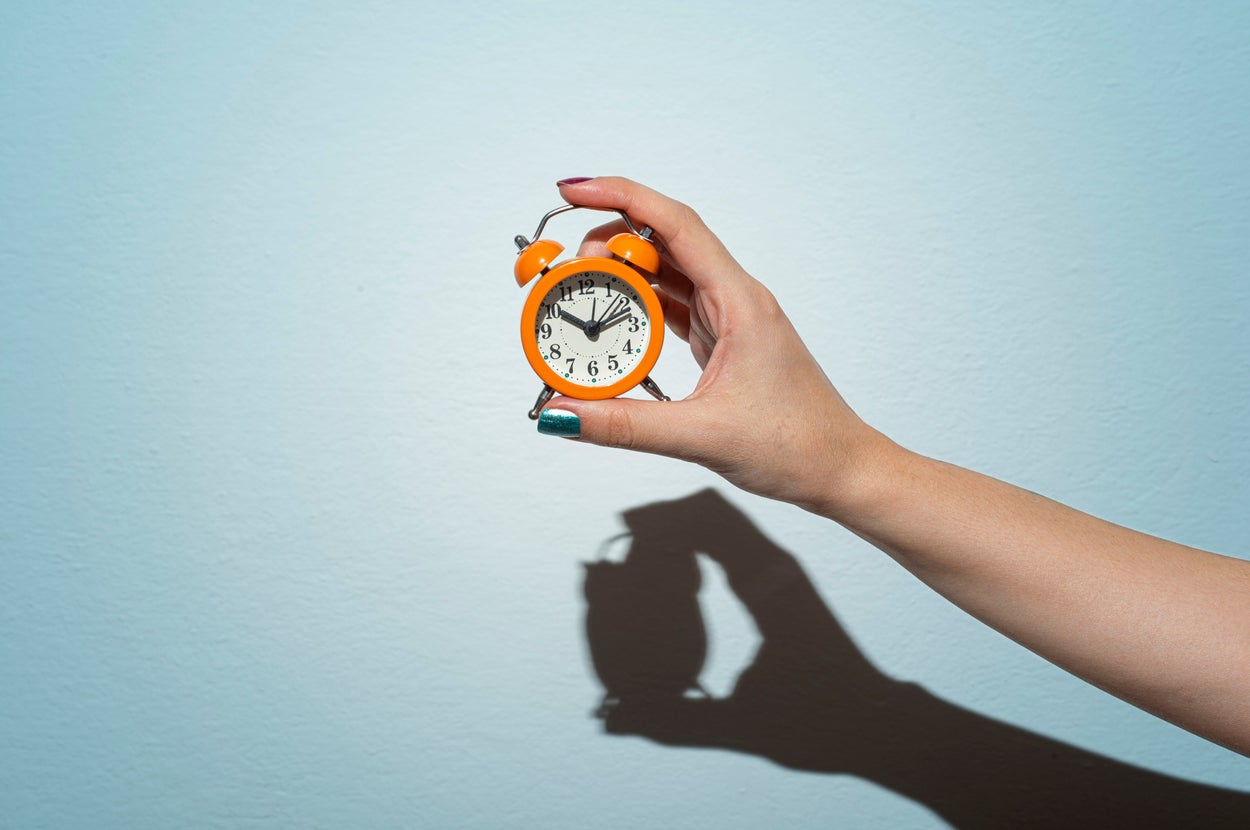
In the UK, the clocks have just sprung forward (meaning it feels like we’ve lost an hour’s sleep).
That shift has consequences. It’s been linked to higher heart attack risk, “social jet lag”, and misaligned body clocks. The British Sleep Society has previously called for clock changes to be dismissed altogether because of how much they mess up our circadian rhythms, which can take weeks to reset.
And no matter what time of year it happens, longer-lasting “chronic circadian misalignment” is linked to a higher risk of diabetes and heart disease.
But some research has found that “zeitgebers” can help to get your body clock back on track.
What are “zeitgebers”?
The term comes from two German words: “Zeit,” meaning “time,” and “geber,” meaning “giver”.
It’s any part of your environment, be it morning light or mealtimes, that acts as a way to “set” or give cues to your body clock.
These are important because our natural circadian rhythm doesn’t run on an exact 24-hour schedule. We need zeitgebers to help match our body clocks to the demands of our social and professional schedules, and to prevent “social jet lag” and other body clock misalignments.